
طلا و نقره
Buying Silver Bullion in Canada: A Newmarket Guide
Compare silver bullion by troy weight, purity, premium, verification and GST/HST treatment before buying in Newmarket.
- Author:
- Elysee Exchange
- Published:
- October 19, 2026
- Updated:
- October 19, 2026
- min read:
- 5
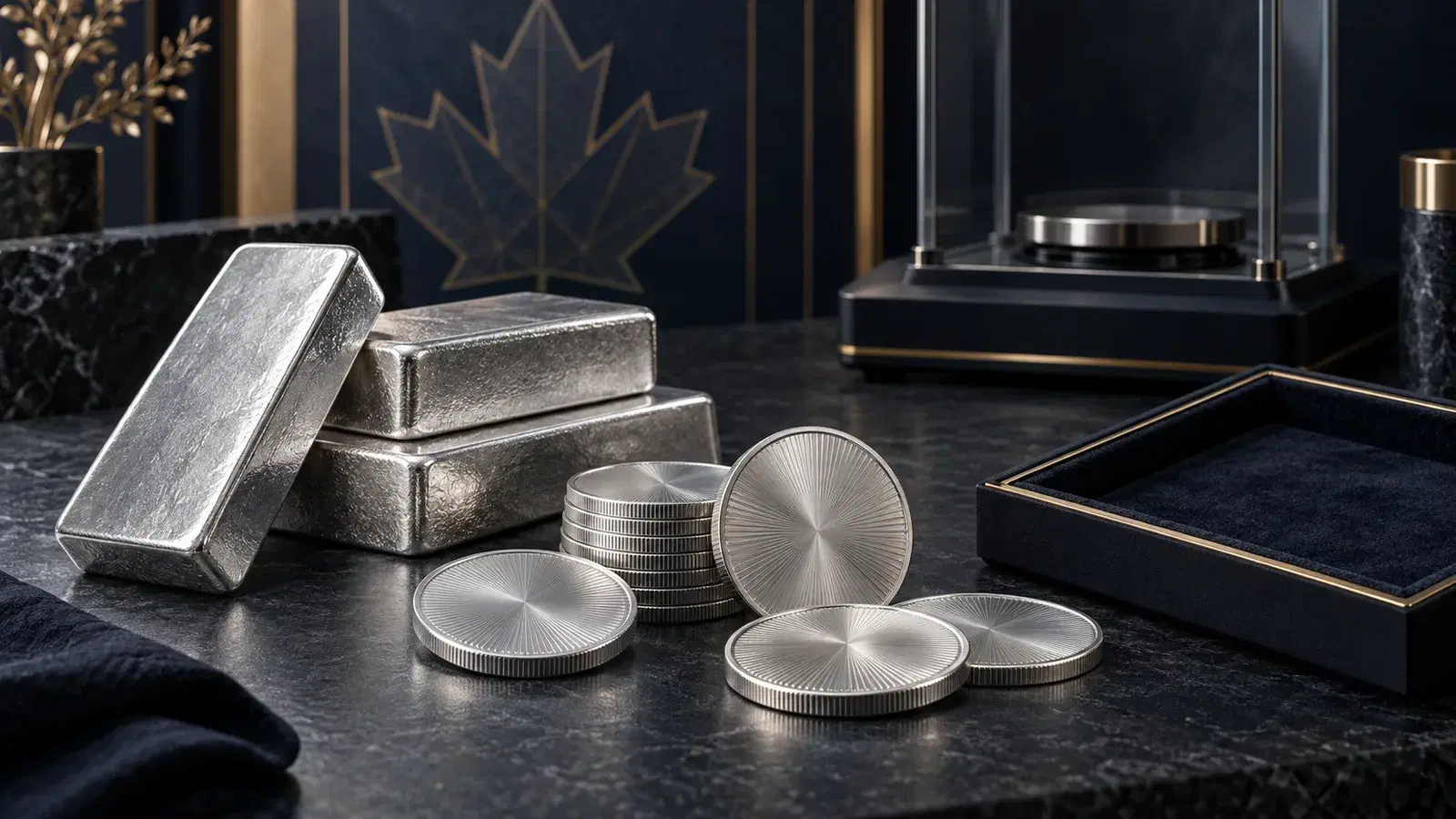
Silver bullion should be compared by the exact product, including troy weight, purity, premium, verification and tax treatment.

Buying physical silver is different from buying jewellery, collectible coins or a market-tracking product. A bullion buyer should understand weight, purity, premium, verification, tax treatment and resale conditions before paying. In Newmarket and York Region, asking these questions in person can make an unfamiliar purchase easier to evaluate.
This guide is educational. It does not recommend silver as an investment, predict prices or provide tax advice. Product availability, quotes and tax treatment depend on the specific item and transaction.
Silver bullion: start with weight and purity
Precious metals use troy weight rather than the everyday avoirdupois ounce. One troy ounce is approximately 31.103 grams. A Royal Canadian Mint one-ounce Silver Maple Leaf bullion coin, for example, lists a weight of 31.11 grams and a purity of 99.99% silver.[1]
Do not infer fine-silver content from size alone. Check the stated gross weight and purity. Fine-silver content is approximately weight multiplied by purity. A one-troy-ounce item marked 99.9% and one marked 99.99% both contain very high-purity silver, but their specifications are not identical.
For a bar or round, look for a recognized refiner or mint, weight, purity mark and serial number when the product type normally carries one. Packaging should support verification, but packaging alone is not proof.
Understand spot price and premium
The “spot price” is a market reference for unallocated wholesale metal. A physical product usually costs more than its raw metal value. The difference is commonly called the premium and can reflect refining, fabrication, distribution, insurance, dealer costs, product demand and available inventory.
When comparing quotes, use the same product, weight and purity. A single one-ounce coin should not be compared directly with a large bar solely by percentage above spot; fabrication and liquidity can differ. Ask for the total price in Canadian dollars and whether any service, shipping or payment-method charge is separate.
On resale, a dealer’s buy price may be below the prevailing spot reference or may vary by product and condition. Ask how the item would be evaluated if sold back. A premium paid today is not guaranteed to be recovered later.
How reputable verification works
Visual inspection is only one layer. Dealers may assess dimensions, weight, magnetic response, electrical properties, ultrasound or other characteristics. The appropriate method depends on the item and available equipment.
The Royal Canadian Mint describes security features on Silver Maple Leaf coins, including precise radial lines and a micro-engraved maple leaf. Its Bullion DNA program uses registered technology to authenticate eligible products dated from specified years.[2] These features apply to particular Mint products; they are not generic proof for every silver round or bar.
Buy from a source that provides a clear description and receipt. Avoid relying on a social-media photo or a certificate that cannot be matched to the item. If buying privately, independent professional verification is especially important.
GST/HST is product-specific
Canada’s Excise Tax Act defines “precious metal” for GST/HST purposes using both form and purity. Canada Revenue Agency guidance describes qualifying gold and platinum at least 99.5% pure and silver at least 99.9% pure, in the form of a bar, ingot, coin or wafer. It explains that qualifying supplies can receive special GST/HST treatment, while products below the required purity or outside the defined form can be taxable.[3]
Do not assume every item described as “silver” is tax-exempt. Jewellery, numismatic products, decorative items or lower-purity pieces may be treated differently. Ask the seller how tax applies to the exact product and obtain professional tax advice for your circumstances.
A Newmarket buyer’s checklist
Before visiting a dealer or exchange, decide whether your priority is a recognized coin, a bar, a smaller denomination or lower fabrication cost. Then ask:
- Who produced the item?
- What are its stated weight and fineness?
- Is it new, secondary-market or previously handled?
- How was it verified?
- What is the total CAD price and premium basis?
- Does GST/HST apply to this exact item?
- What receipt and product details will I receive?
- How would a future buyback be assessed?
Elysee Exchange lists gold and silver bullion as a branch service, subject to availability, verification and quote. Customers can review the Newmarket location page and call ahead for current inventory. The trust and compliance page provides context for the documented transaction process.
Storage and recordkeeping
Physical ownership creates storage responsibilities. Consider theft, fire, moisture, scratches and loss of identifying documents. Choose secure storage appropriate to the amount and check whether an insurance policy covers precious metals and under what conditions.
Keep invoices, assay information, serial numbers and clear photographs separate from the metal. Records can support insurance, estate planning, cost tracking and later resale. Do not publicly post storage locations or full serial numbers.
Avoid urgency and price predictions
Search results often frame silver as a “buy now” opportunity or promise a future price. No one can guarantee the short-term or long-term market. A strong educational page should explain the product rather than create fear of missing out.
Take time to compare total costs, verification and resale terms. If the purchase is part of a financial plan, consult a qualified adviser who understands your objectives and risk tolerance.
Ask how each silver bullion product was verified. Compare silver bullion quotes only for the same weight, purity and product type.
The takeaway
Evaluate silver bullion by the exact item: troy weight, purity, maker, verification, premium, tax treatment and documentation. Compare like with like and ask for the total Canadian-dollar price. A local Newmarket visit can help you inspect the product and discuss the process, but it does not remove market risk. Confirm availability and the final quote before purchasing.
Sources
[1] Royal Canadian Mint, one-ounce 99.99% pure Silver Maple Leaf specifications.
[2] Royal Canadian Mint, Bullion DNA and security features.
[3] Canada Revenue Agency, GST/HST definition and treatment of qualifying precious metals.