
Rate education
How currency exchange fees and spreads differ
A fee and a spread are not the same thing. Here is how to read both and compare the real total cost.
- Author:
- Elysee branch desk
- Published:
- May 11, 2026
- Updated:
- September 17, 2026
- min read:
- 2
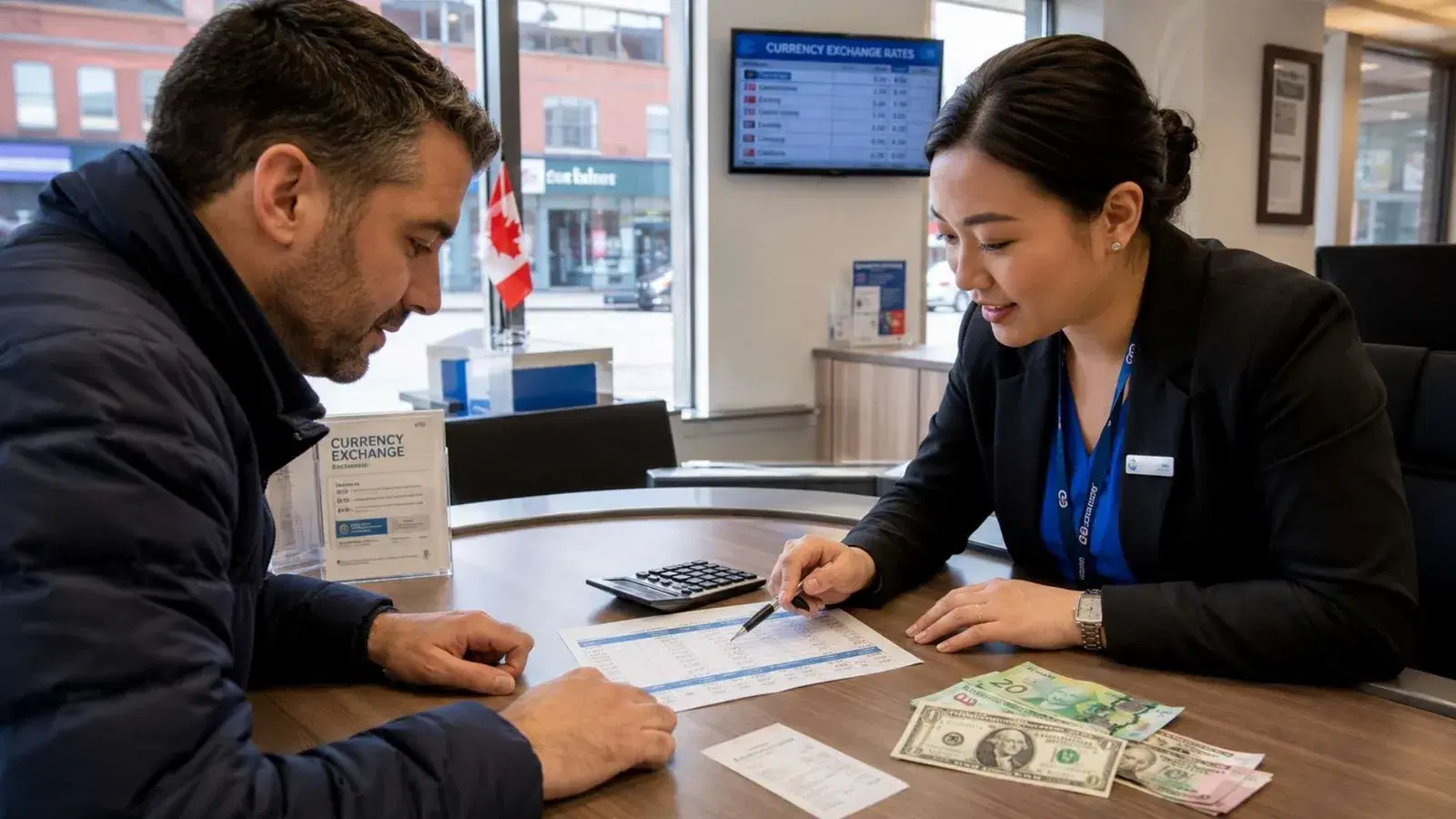
Comparing providers fairly starts with one distinction: currency exchange fees and spreads are two different costs, and looking at only one of them can make an expensive offer look cheap. A desk advertising "zero fees" may build its margin into the rate; another may post a sharp rate and add a fixed charge on top.
Currency exchange fees are not the spread
A fee is an explicit amount you are charged for the service — fixed or percentage-based, and it should always appear on your receipt. The spread is implicit: it is the distance between the rate you receive and the market midpoint. Both are legitimate ways to price the service; the problem is only when one of them is left out of a comparison.
Read the total cost
To compare fairly, look at the rate you receive together with any stated fee. The combination is your real cost. The simplest method: ask each provider, "if I give you this exact amount, how much do I walk away with?" That single final number contains every fee and every spread, and it makes offers directly comparable — no arithmetic, no fine print.
A worked example
Suppose you convert 1,000 US dollars to Canadian dollars. Provider A offers a rate of 1.3600 with no fee: you receive 1,360.00 CAD. Provider B offers 1.3700 minus a 5 dollar fee: you receive 1,365.00 CAD. The "fee-free" desk pays you less. Numbers like these shift daily, which is why, when comparing currency exchange fees, the final-amount question beats any advertisement. The background on how those posted numbers are set is covered in how buy and sell rates work.
Before you decide
- How to use this guide: this is general information — match it to your own currency, amount, and timing, then confirm the details with the branch.
- Details worth checking: ask for the final amount you will receive, and confirm anything time-sensitive, like a rate, for your specific request.
- Keep a record: keep receipts showing the rate and any fee; for next steps, contact the Newmarket branch.