
Money transfer guides
How to recognize common money transfer scams
Warning signs that a transfer request may not be legitimate, and what to do when something feels wrong.
- Author:
- Elysee branch desk
- Published:
- May 19, 2026
- Updated:
- August 3, 2026
- min read:
- 2
Most money transfer scams do not look like crime at first — they look like urgency. A relative in sudden trouble, an official demanding immediate payment, a great deal that expires today. The stories change; the mechanics repeat. Learning a handful of patterns protects you better than trying to memorize every scheme.
Watch for pressure
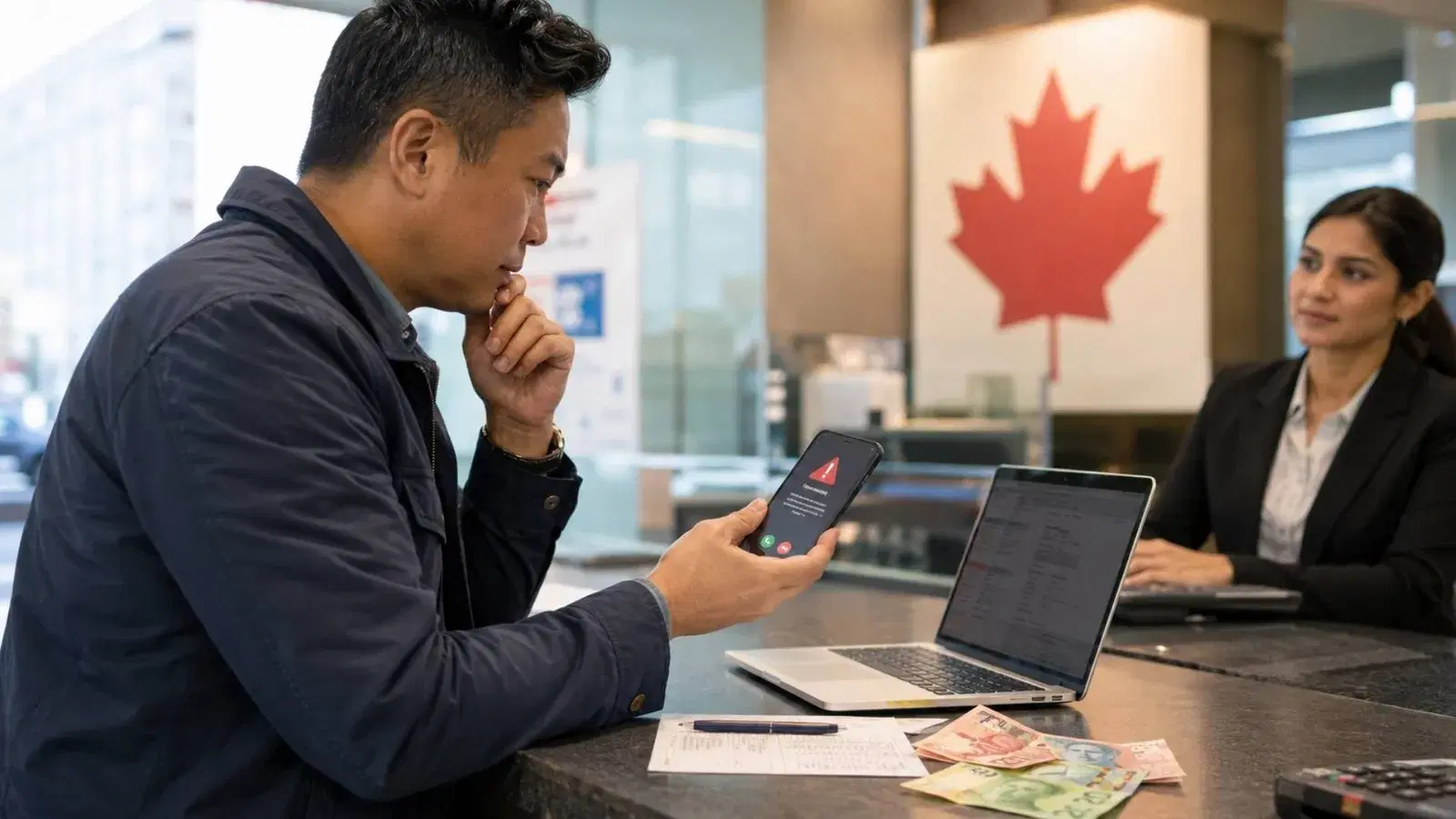
Urgent pressure, unusual requests, and refusal to verify details are common warning signs. When in doubt, stop and ask the branch. Legitimate organizations do not demand payment by wire within the hour, and they do not object to you taking time to verify. Pressure to keep the transfer secret from family or bank staff is its own red flag — secrecy is a tool of the scheme, not a courtesy to you.
The patterns behind common money transfer scams
A few shapes account for most losses: the emergency scam, where a caller poses as a relative or lawyer needing money now; the impersonation scam, where a "government agency" demands payment and threatens arrest; the romance or online-friend scam, building trust for weeks before the first request; and overpayment scams, where a stranger sends too much and asks for the difference back. The Canadian Anti-Fraud Centre documents these patterns and collects reports.
Verify independently, then decide
One habit defeats most money transfer scams: verify through a channel you found yourself. Call the relative on their known number; look up the agency's official line; never use contact details provided by the requester. Money sent by wire is effectively cash — recovery after the fact is rare, which is why the pause before sending matters. If a transfer request follows an unusual story, describe it plainly at the counter; staff have seen the patterns before, as covered in what to prepare before an international money transfer.
Before you decide
- How to use this guide: this is general information — if a real request feels off, pause and verify before sending anything.
- Details worth checking: verify the requester through contact details you found independently, never ones they provided.
- Keep a record: keep messages and receipts; report suspected fraud to the Anti-Fraud Centre and talk to the Newmarket branch.